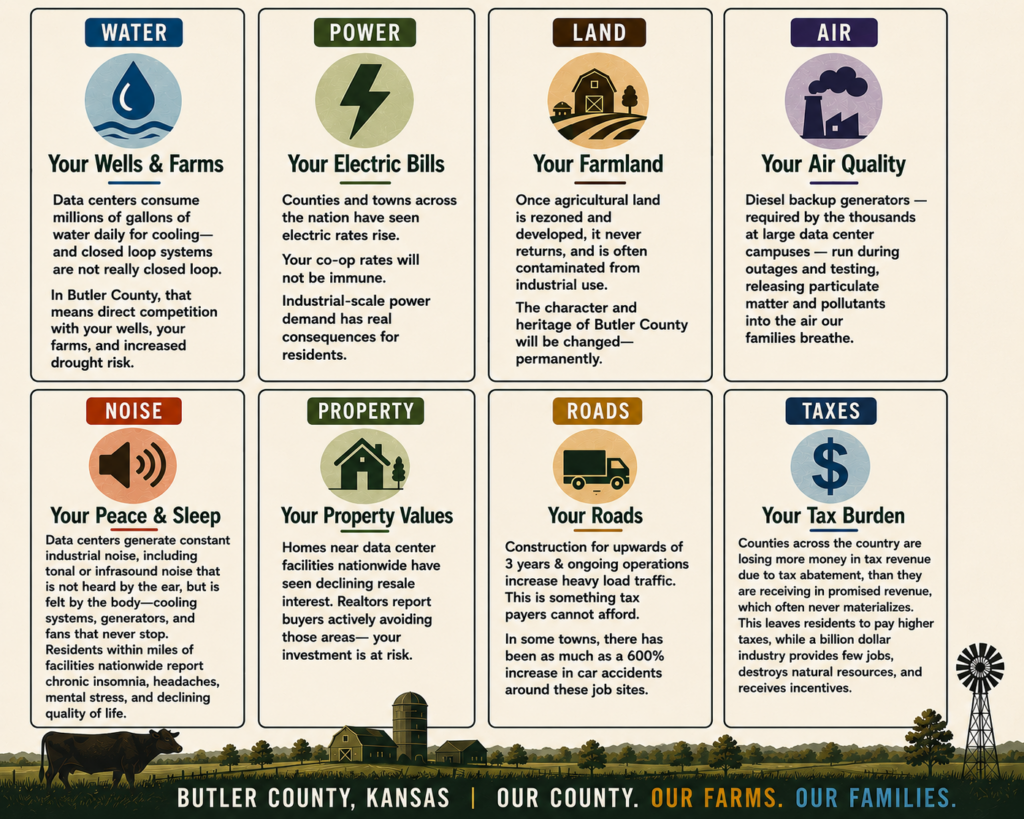
Tonal Noise is a prominent issue for communities near large hyperscale and AI data centers. It is made of inaudible frequencies: High-frequency whines and low-frequency infrasound penetrate walls and windows, causing severe sleep disruption, headaches, high cortisol levels, and a decrease in quality of life, although the overall decibel reading is legally compliant.
That’s because this noise is not measured with a standard decibel reader. There are varying types of decibels, and I’ll let the experts explain that to you here.
This video is in reference to infrasound and tonal noise. That is, sound waves not heard by the human ear, but felt by the brain and body. This noise has an impact not only on the human body, but also that of livestock and even impacts crops. It is known to cause breeding issues in animals such as cattle and horses by disrupting cycles, and impacts developing babies. Tonal noise is not absorbed like a typical sound wave, thus it isn’t stopped by walls. But instead pings off of buildings and other structures like asphalt … and wind carries it even further. More reasons we don’t need data centers in Kansas!
A quick definition from the video- Many of us, myself included, think of environmental health as the animals, land, air, and water only. But it is actually a core, foundational branch of public health that focuses on how built environments impact human health.
“… The problem is at night, when your central nervous system is at its call phase, that noise, not yet hazardous, when mixed with the low frequency vibration, creates a systemic effect.
A compounding exposure; it exacerbates what that noise would do to your body even though not yet deemed hazardous. So yes, it is very harmful, especially to developing brains in the frontal lobe of children and to expectant mothers.“